Preference Card Management, every card current
Every Surgeon's Card. Always Current.
Preference cards are the link between a surgeon, a procedure and the supplies on the table. Most hospitals run them on spreadsheets, paper or PDFs that drift from reality the moment a surgeon changes a technique. Preference Card Management gives surgeons, theatre teams and supply chain a single live record of every card, with version control, surgeon sign-off and direct integration with Point of Care so the card on the screen is the card supply chain prepared against.

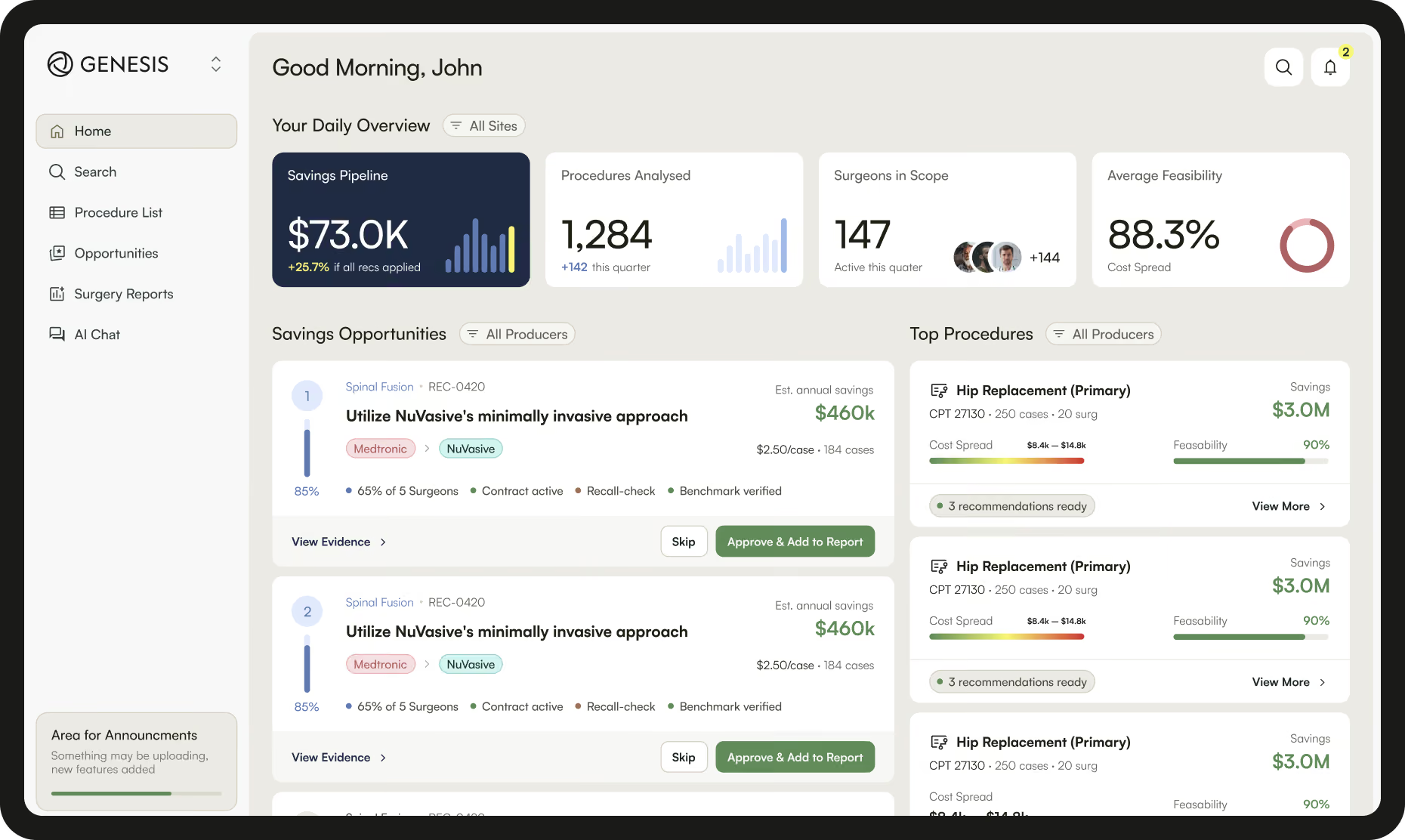
An out-of-date card costs every case time, money, and goodwill.
When a preference card is wrong, the surgeon improvises, the team scrambles, and the case overruns. Multiply that across hundreds of cases a month and the cost is significant in time, in spend and in the relationship between the theatre and supply chain. Preference Card Management replaces the drift with a live, version-controlled record that surgeons own and supply chain trusts.
The Problem
Preference cards live in spreadsheets, paper folders and individual surgeons' heads, drifting from reality every time a technique changes. By the time supply chain prepares the case trolley, the card and the surgeon are no longer in agreement, and the case bears the cost.
The Capability
Preference Card Management gives every card a single live record, with surgeon sign-off, version control, change history and direct integration with Point of Care so the card on screen is always the surgeon's current version.
The Outcome
Theatre teams work to current cards, surgeons sign off changes when they make them, supply chain prepares accurately, and the cost of card drift disappears.
Powered by Point of Care
Where the Card Stays Current Before the Case Starts
Preference Card Management is the card-content workflow within Point of Care. The parent product gives the scan-driven capture at the moment of use; Preference Card Management keeps the cards loaded on scan accurate, signed off, and current.
“Our preference cards used to be the source of arguments between the theatre and supply chain every other week. Once the surgeons signed off in the platform and the cards synced through to the scan workflow, the conversation changed. The card is current, the trolley is right, and the case starts when it is meant to.”
Common questions, answered directly
Frequently Asked Questions
Preference Card Management is the feature within Genesis Point of Care that owns the workflow for creating, updating, signing off and syncing surgical preference cards. It is the upstream content layer for the cards that Point of Care loads on scan at the start of every case.
Existing cards can be imported as the starting baseline. The platform then becomes the live source of truth for new versions, with surgeon sign-off and version control on every change. Existing systems can continue as historical archives or be retired over time as your team prefers.
The surgeon owns the card content. Service line leadership and theatre managers own the operational layer (which cards are active, which procedures they cover). Supply chain consumes the card to prepare the case trolley, but does not own its content.
Each surgeon has their own version of each card they perform. The procedure is shared, the surgeon-specific layer is theirs. When a case lands on the schedule, the card loaded is the right surgeon's.
Anaesthesia preference cards follow the same workflow: the anaesthetist owns the content, the version control and sign-off apply, and the card loads alongside the surgical card at the start of the case.
Every change to a card is logged with the change, the person who made it, the timestamp and any associated notes. Earlier versions can be reviewed, compared and, where needed, restored.
Procedure scheduling data flows from the EHR so the right card loads for the right case automatically. Where the EHR holds preference data or surgeon information, integrations keep both systems in step.
Approved cards flow into your case trolley preparation workflow, so the right items are pulled for the right surgeon and the right procedure. Changes to a card propagate to upcoming cases automatically.
Real consumption captured by Point of Care is compared against cards over time. Items consistently unused are surfaced for the surgeon to review, items consistently added mid-case are suggested. The card slowly converges on what surgery actually does.
Point of Care loads the active card at the start of every case, drawing on the live content this feature owns. Preference Card Management is the upstream workflow that creates, updates and signs off that content. They work together; you do not buy Preference Card Management without Point of Care.
See preference cards that surgeons trust and supply chain can rely on.
Book a walkthrough to see Preference Card Management run through card creation, surgeon sign-off, sync to Point of Care and learning from real consumption, on the platform that powers Genesis Point of Care.