Price Benchmarking, negotiate from peer-validated evidence
Negotiate From Peer-Validated Evidence, Not Spreadsheets
Genesis Price Benchmarking surfaces peer-cohort price comparisons against community-validated market data, backed by classified item attribution rather than text-matched descriptions. Contracting teams see where the negotiation leverage is, and finance teams see where the variance hurts most.

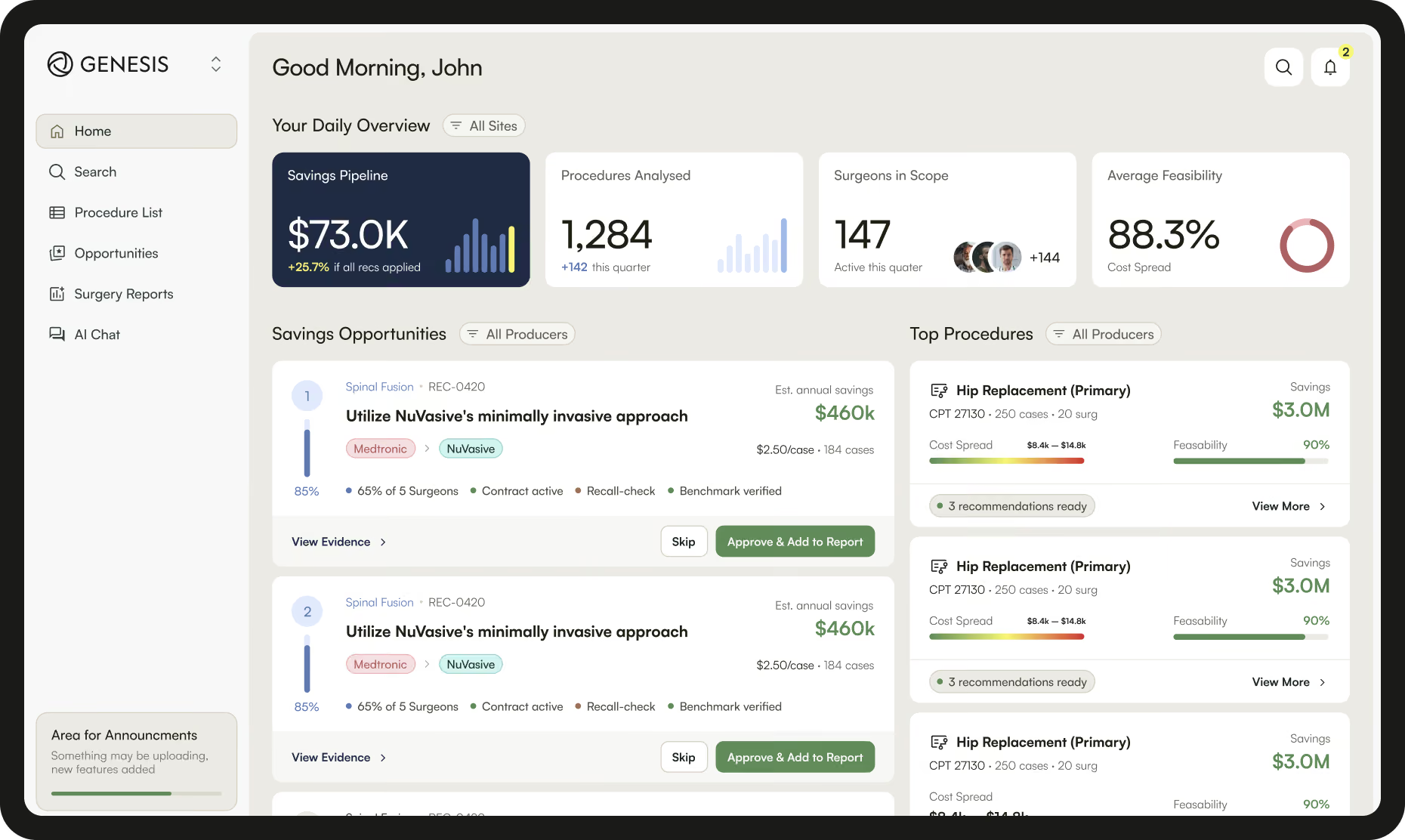
Your Price. The Cohort Price. The Variance, Quantified.
One screen shows a contracted item next to its peer-cohort price distribution, the value of the variance, and the attribution showing the comparison is apples-to-apples.
The Problem
Contracting teams often negotiate using vendor-provided benchmarks, which the vendor controls and can skew in its own favour. Finance teams typically discover pricing variance only after the contract is signed, once the leverage is gone.
The Capability
Price Benchmarking surfaces peer-cohort price comparisons from the Genesis customer network, scoped by classification so they're apples-to-apples. Each comparison shows the organisation's position in the distribution, the value of the variance, and the methodology behind it.
The Outcome
Contracting teams negotiate with credible peer-cohort evidence in hand. At Allegheny Health Network in the US, price variance above peer cohort fell from 7% in 2022 to 1% in 2024 through two cycles of benchmark-informed negotiation.
Powered by Content Management
Built on the Classified Catalogue Apples-to-Apples Comparison Requires
Price Benchmarking runs on the same classified item master Content Management produces. Without consistent classification, cross-vendor comparisons fall back to text matching, which isn't reliable enough for negotiation.
What Content Management Provides
Continuously governed item data, contract pricing, recall intelligence, vendor catalogues, and industry codification.
Explore
What Price Benchmarking Delivers
Peer-cohort price comparisons with a disclosed methodology, quantified variance, and negotiation-ready summaries.
Explore
“Clean data is the bedrock of a modern supply chain. By normalizing and attributing every item, we created the visibility needed to manage spend, reduce risk, and stay proactive, not reactive.”
Common questions, answered directly
Frequently Asked Questions
Cohorts are scoped algorithmically for an apples-to-apples comparison: same UNSPSC class, comparable volume tier, and similar contract structure. Cohort composition is disclosed with every benchmark so contracting teams can defend it in negotiation.
Yes. Contracting teams see distribution statistics like quartile bands and median, but never which specific peer organisation pays which price.
Group purchasing and framework pricing show the negotiated rate, not what peer organisations are actually paying after local adjustments. Genesis benchmarks on transaction-level data to show where your organisation actually sits relative to peers. The two are complementary.
Yes. Benchmarks surface for any item with consistent classification, contracted or not, file or non-file, so negotiation opportunities show up even where no contract exists yet.
Continuously. Transaction-level data from the Genesis customer community feeds the benchmark engine on a rolling basis, so comparisons reflect current market conditions.
Price Benchmarking runs within Content Management, so Content Management needs to be live first. Most organisations bring in Classification System and Revenue Code Management first to establish the data quality benchmarks depend on.
Contracting teams pull benchmark summaries ahead of the negotiation and use the quantified variance to support specific asks. Allegheny Health Network's three-year price parity improvement in the US, from 7% to 1%, came primarily from benchmark-informed renegotiation of existing contracts.
The two pair closely. Contract Management governs the contracts in force, and Price Benchmarking supplies the negotiation evidence for the next round. Organisations running both report the strongest price parity improvements.
Ready to Negotiate From Peer-Validated Evidence?
Talk to a Genesis expert about bringing community-validated price benchmarking to your next contracting cycle.