Use case: Clinical traceability
Which device. Which
patient. Within hours.
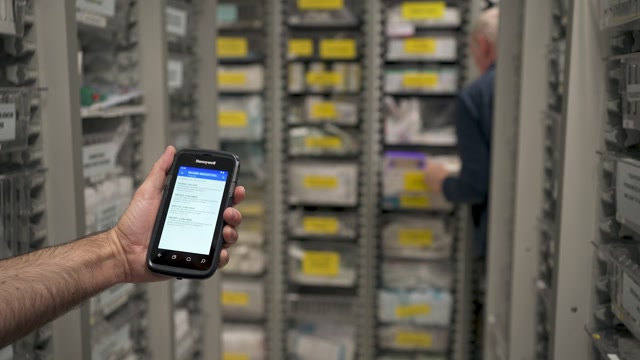
Genesis captures a scan-level record of every high-risk device at the point of use, so when a field safety notice arrives your team can answer it the same day, with evidence.
The clinical traceability platform behind NHS Scotland's national Scan for Safety program, spanning 14 Health Boards.

The problem
When the recall notice lands, the clock is already running
A field safety notice does not arrive with a list of your patients attached. It arrives with a manufacturer, a device, a batch range and an expectation that you will act quickly.
The regulatory position is tightening as well.
In January 2026 the Scottish Government wrote to every Health Board setting out that regulatory obligations were coming, and that each Board needed a credible plan for 100 percent coverage.
For most hospitals, that is the moment the gap becomes visible.
Device records sit in handwritten OR logbooks, in barcode stickers peeled onto paper sheets, in ward-level spreadsheets and in the memory of whoever was in the room. Finding every affected patient means someone physically working through the books, often a consultant, because they are the only person who can reliably read the handwriting.
Weeks to hours
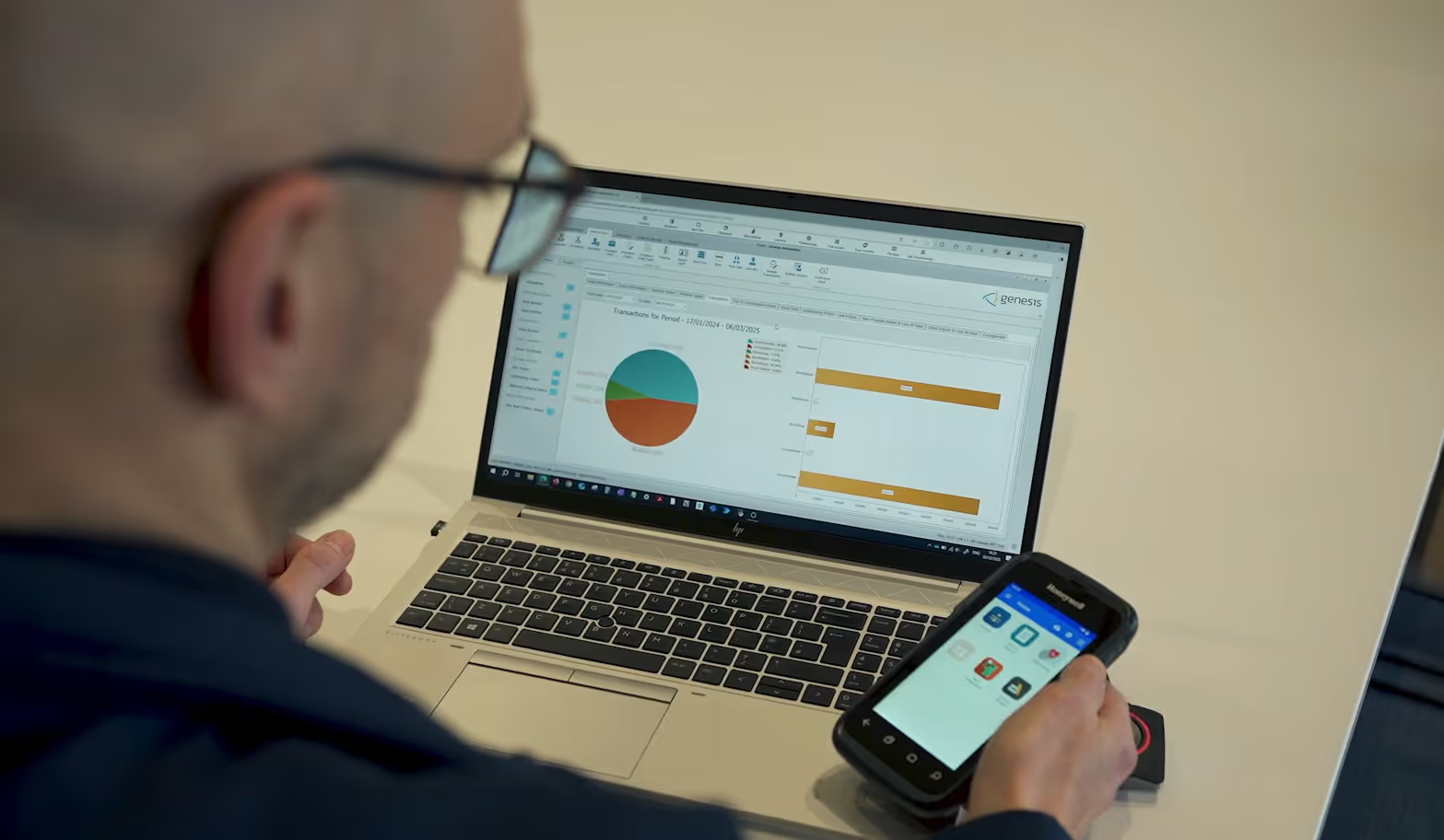
Time to establish whether a device named in a field safety notice is present in the system
1 day a week
Clinical time returned to a Clinical Nurse Manager after scanning went live in two operating rooms
0% to 100%
Recall identification prior to ordering, following data normalization and platform rollout
Weeks to hours
Time to establish whether a device named in a field safety notice is present in the system
The manual process is tedious, time-consuming, and anything that is tedious and time-consuming is by definition error prone. One of the most difficult things is having absolute confidence that you have not missed anybody

Andy Malyon
National Clinical Lead, Scan for Safety Scotland
Proof
Health systems already
doing this
£10 million gain in inventory visibility across 210 departments, with over 70,000 orders raised and
close to 600,000 items tracked
“We now have real-time control over spend at every level — driving compliance without slowing down operations.”
Scott Meiser
VP Supply Chain Operations

"Genesis has given us complete visibility of our supply chain for the first time — turning millions of scans into savings we can measure and data our clinical teams can act on."
Simon Walsh
Procurement Director, Manchester University NHS Foundation Trust
"Genesis is the ultimate win for clinical staff. Not only does it save us significant time, it is also instrumental to protecting our patients and helping us make more informed, data-driven decisions."
Heidi Cox
Specialty Manager, Cardiology, Royal United Hospitals Bath NHS Foundation Trust
Case study
NHS Scotland:
clinical traceability at national scale
Common questions, answered directly
Frequently Asked Questions
Genesis Savings ties a portion of Genesis compensation directly to validated savings performance, typically delivering a 5:1 to 6:1 return on investment while reducing upfront investment.
Yes. Genesis Savings engagements include clearly defined savings targets and performance accountability. Under the shared-savings model, Genesis commits to a documented minimum-savings threshold. If results fall short, a portion of the difference is refunded back to the health system. For organizations seeking minimal financial risk, the at-risk hybrid structure significantly reduces upfront investment while aligning Genesis compensation directly to realized outcomes.
Most customers begin identifying measurable opportunities within the first several weeks of engagement. When new categories go live, first-month reductions are common. For larger strategic sourcing initiatives, Outsourced Contracting RFP cycles typically move from kickoff to executed agreements in approximately 90 days.
By design, no. Savings come from price negotiation, capitated constructs, waste elimination, and tier enforcement, not from vendor consolidation or restricted physician choice. Customer testimonials specifically cite this as the differentiator versus traditional cost-containment programs.
Unlike traditional GPO models that maintain direct economic relationships with manufacturers, Genesis focuses solely on protecting the financial interests of the health system. The team includes former medical device and healthcare industry professionals who understand supplier pricing strategies, contracting behaviors, and PPI negotiation dynamics firsthand. The result is a more transparent, data-driven approach focused on defensible savings and long-term margin protection.
Genesis is built to work with your existing systems. ERP: Oracle / PeopleSoft, Oracle Cloud, Infor, Workday — production-grade integrations with auto-PO generation and three-way match support. EHR: Epic (including OpTime via VenSero), Cerner / Oracle Health, Meditech — for case scheduling and patient/case data sync.
Yes. PPI Protection is sold as the Genesis Savings anchor module. Customers typically engage Outsourced Contracting on a project basis when entering a new category or running a major RFP.
Explore other use cases
01
Operating room efficiency
Take the admin out of operating room and give the time back to clinical teams.
02
Point of care charge capture
Capture every chargeable item at the
moment of use.
03
Supply chain visibility
One live view of inventory across every site, unit and supply room.
04
Value analysis and clinical variation
Evidence to challenge product choice and standardize with confidence.
05
Procurement and contract compliance
Guardrails that keep spend on contract without slowing clinicians down.
06
Finance and margin
Connect supply usage to reimbursement and see the true cost of a procedure.
Grow margin and improve care with complete clinical traceability.